Introduction
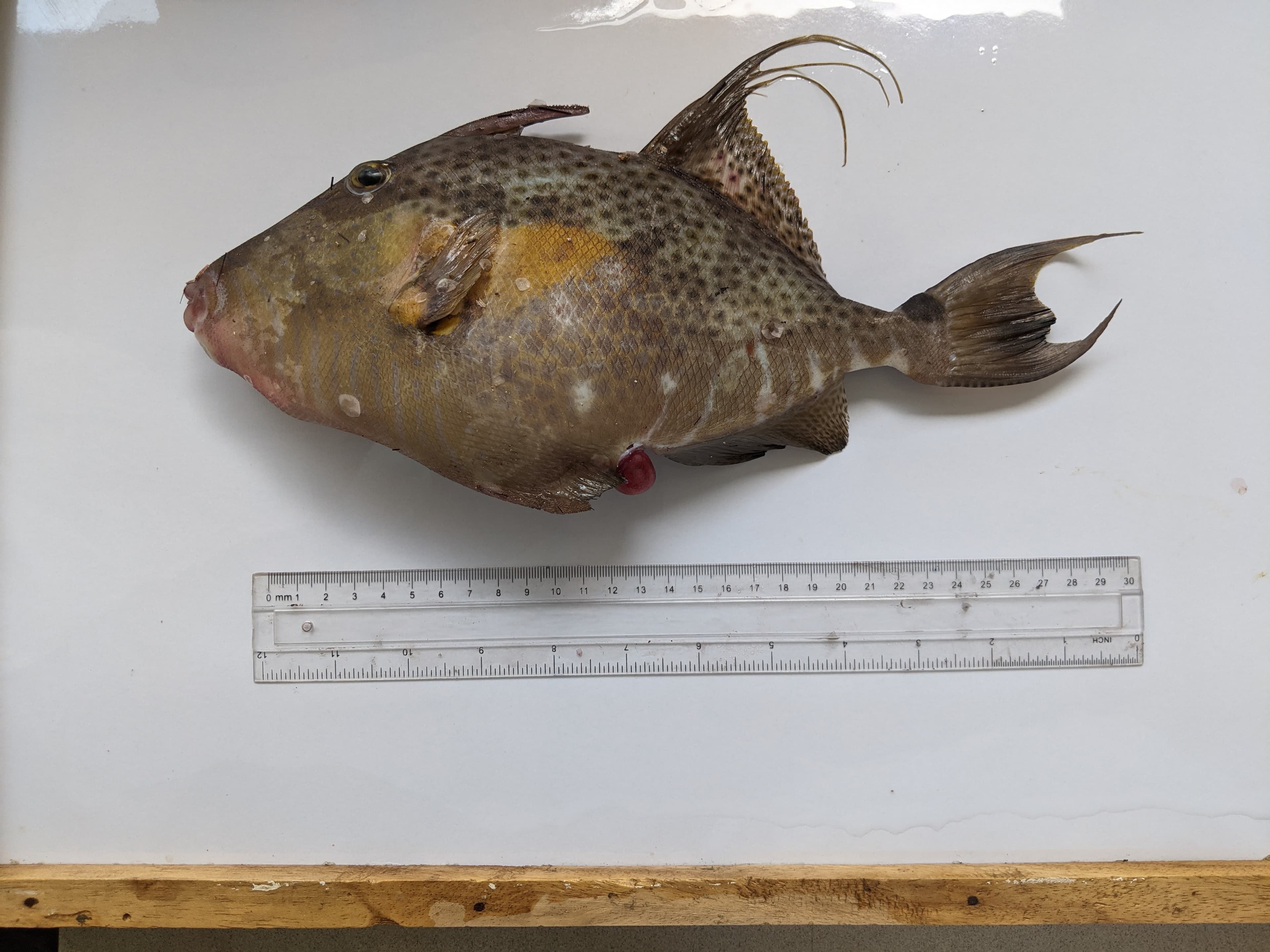
The Bluespotted triggerfish (Balistes punctatus) is a demersal species found along the West African coast, including Ghana. Although it holds marginal economic importance, its decline reflects broader challenges in coastal fisheries management. Recent assessments using length‑based methods reveal alarming trends in growth, mortality, and reproductive potential, underscoring the urgent need for sustainable exploitation strategies.
Growth and Life History
The species exhibits slow growth, with an asymptotic length (L∞) of 45.4 cm and a growth rate (K) of 0.226 year⁻¹. Longevity is estimated at 14 years, consistent with the life history of slow‑growing fishes. The growth performance index (φ′ = 2.667) further highlights the species’ vulnerability to overexploitation, as slow growth and extended lifespan limit its ability to recover from intensive fishing pressure.
Mortality and Exploitation
Fishing mortality rate far exceeded natural mortality, resulting in an exploitation rate above the conventional optimum of 0.5. This imbalance indicates that the stock is being overexploited. The ratio of fishing to natural mortality (F/M = 2.08) confirms that fishing pressure is the dominant driver of population decline.
Spawning Potential and Capture Dynamics
The spawning potential ratio (SPR) was estimated at just 0.07, far below the precautionary threshold of 0.20. This critically low reproductive capacity suggests that the stock’s ability to sustain recruitment is severely compromised. Moreover, the length at first capture (25.6 cm) nearly overlaps with the length at first maturity (25.2 cm), meaning individuals are caught just as they reach reproductive age. Such exploitation patterns heighten the risk of recruitment overfishing.
Stock Status and Regional Context
Virtual population analysis revealed that survivorship declines sharply with increasing fishing mortality, with few individuals surviving beyond 30 cm. This truncation of population structure reflects intense fishing pressure on mid‑sized individuals. Regionally, triggerfish landings in Ghana have collapsed from 158 tonnes in 2014 to just 58 tonnes in 2023, mirroring declines across the Gulf of Guinea. Overlapping artisanal and semi‑industrial pressures, combined with environmental variability, have pushed B. punctatus into a vulnerable category.
Management Recommendations
To protect the species, precautionary measures are urgently needed. Fishing mortality should be reduced by approximately 30% to align with biological reference points. Revising minimum legal landing size above 25.2 cm would ensure individuals spawn before capture. Seasonal closures during critical reproductive periods, coupled with routine monitoring, could help rebuild stocks and enhance long‑term sustainability.
Conclusion
The case of Balistes punctatus in Ghanaian waters illustrates the consequences of unchecked fishing pressure on slow‑growing species. With critically low spawning potential and high exploitation rates, the stock is at risk of collapse. Implementing precautionary management measures is essential not only for the survival of this species but also for the resilience of Ghana’s coastal fisheries and the livelihoods they support.