The Owabi Reservoir in Ghana is a vital freshwater ecosystem that supports both biodiversity and local communities. Between March and August 2022, a study was conducted to assess fish populations and water quality in the reservoir. Six main species were identified, namely Coptodon zillii, Hemichromis fasciatus, Oreochromis niloticus, Chrysichthys nigrodigitatus, Labeo senegalensis, and Sarotherodon galilaeus, with the majority belonging to the family Cichlidae. Among these, Sarotherodon galilaeus was the dominant species, followed by Oreochromis niloticus. Fortunately, all species were classified as Least Concern (LC) under the IUCN Red List, indicating no immediate risk of extinction. Water quality assessments revealed mean values of 19.3 °C for temperature, 7.4 for pH, 246.4 µS/cm for conductivity, and 172.6 ppm for total dissolved solids. Further analysis showed dissolved oxygen at 3.26 mg/L, phosphate at 0.66 mg/L, and nitrate at 0.06 mg/L. While phosphate and nitrate levels were within WHO’s acceptable limits for fish habitats, dissolved oxygen fell below the recommended threshold of 5 mg/L, likely due to eutrophication. The study highlights the need for continued monitoring and management to ensure the reservoir remains a healthy environment for aquatic life. The study was made possible through the generous support of IDEAWILD, which provided essential equipment such as water quality probes, GPS navigators, and precision scales, greatly enhancing the accuracy and reliability of the research.
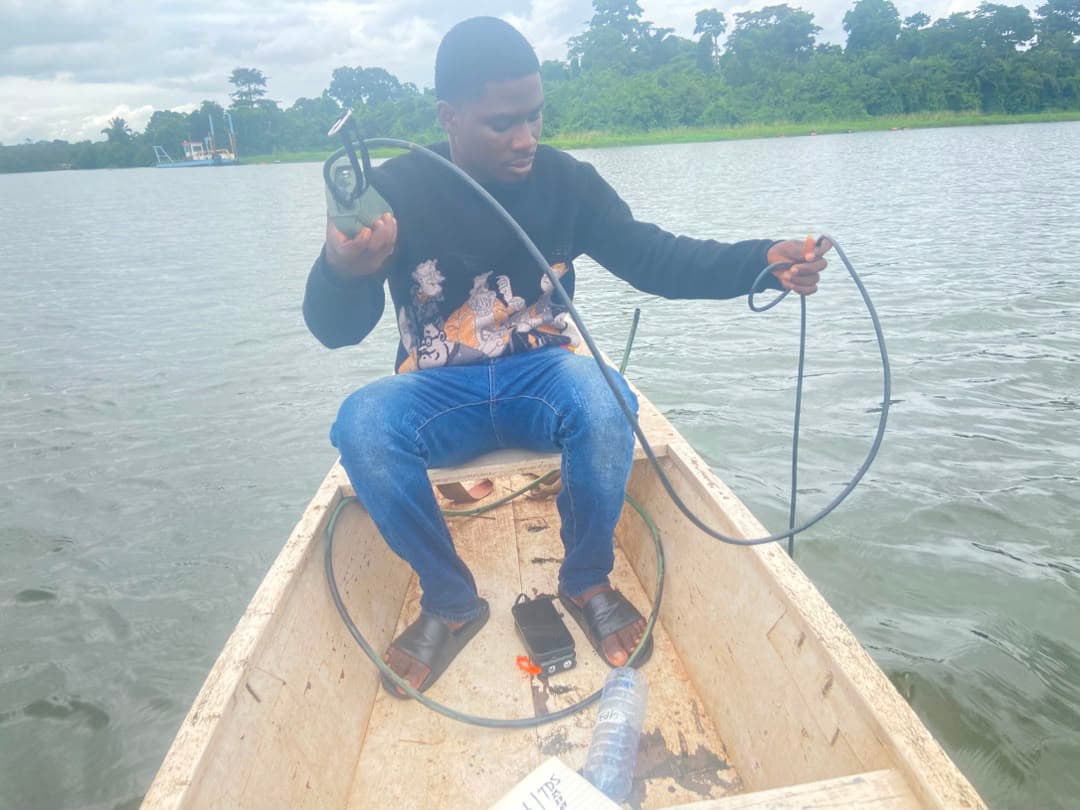
Population Assessment of Vulnerable Fish Species in the Owabi Lake
By Dr. Amponsah•August 31, 2026
#Owabi Reservoir#Water quality parameters#IDEAWILD#Sustainable fisheries#Reservoir fisheries
Dr. Amponsah
Dr. Samuel Kweku Konney Amponsah is a fisheries scientist with a PhD in Fisheries Science and a Senior Lecturer at the University of Energy and Natural Resources, Ghana. He teaches a wide range of fisheries-related topics, equipping students with the knowledge and skills to advance sustainable aquatic resource management.