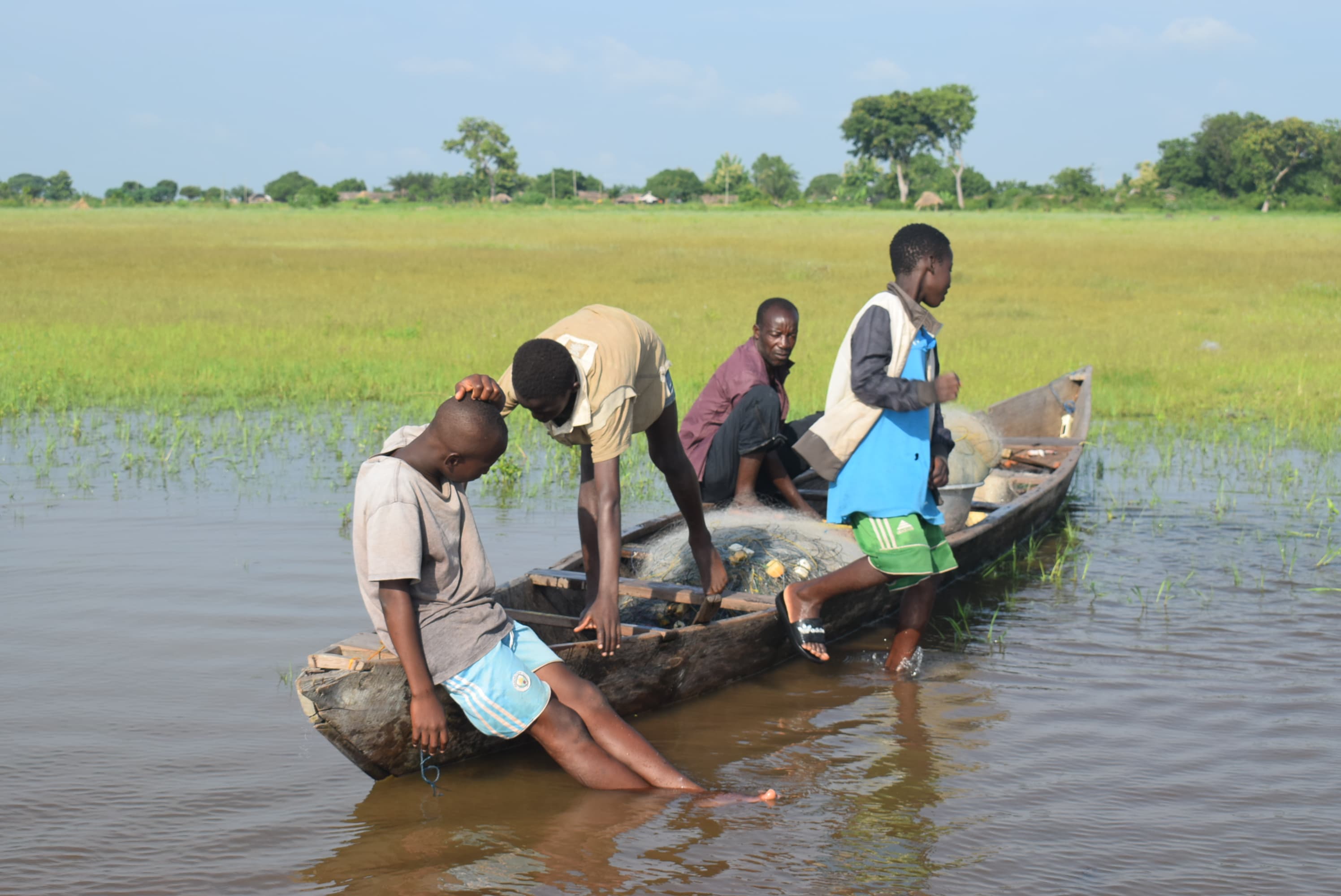

Seasonal Variation in Lake Volta’s Fisheries: Insights for Global Reservoir Management
Lake Volta, Africa’s largest man‑made reservoir, sustains one of West Africa’s most important inland fisheries, yet its ecological dynamics remain underexplored. Our study in Stratum VII applied rigorous ecological methods which included monthly sampling from January to December 2023 with species identification done using standard taxonomic keys. Advanced statistical analyses including Shannon diversity, Pielou’s evenness, independent t‑tests, Bray–Curtis similarity, NMDS ordination, ANOSIM, and SIMPER in PRIMER 6 were done uncover how seasonal hydrology shapes fish assemblages. These methods provided robust insights into both diversity and abundance patterns, reducing bias from dominant taxa while highlighting rare species.
The results showed a total of 42 species, with marginally higher richness in the dry season (37 species) compared to the wet season (35 species). Shannon diversity (~2.05–2.06) and evenness (~0.997–0.999) showed no significant seasonal differences, suggesting resilience in species distribution despite abundance fluctuations. However, wet season catches were consistently higher, averaging 1,580 individuals compared to 722 in the dry season, reflecting recruitment pulses driven by flood inflows. Four species, namely Chrysichthys walkeri, C. nigrodigitatus, Schilbe mystus, and Coptodon zillii, dominated catches, together accounting for more than 50% of total abundance, while over 25 taxa were rare, underscoring ecological heterogeneity and the importance of conserving less common species. Multivariate analysis revealed distinct seasonal assemblages, with November clustering separately as a transitional month, likely due to shifting hydrological conditions. SIMPER analysis identified Synodontis sorex, Chrysichthys auratus, Schilbe mystus, and Hemichromis fasciatus as key contributors to seasonal dissimilarity, highlighting their ecological sensitivity and management importance.
These findings carry significant policy implications, including seasonal closures during low‑abundance months, habitat protection to conserve littoral vegetation and floodplain connectivity. Also, the institutionalization of livelihood diversification to reduce household vulnerability is for sustaining fisheries. Monitoring assemblage composition of key taxa could serve as early warning indicators of ecosystem stress, enabling adaptive management. Lake Volta’s seasonal dynamics mirror challenges in tropical reservoirs globally, where climate variability and dam regulation highly destabilize hydrological regimes. Findings from this study (Ghana) therefore underscore the urgency of ecosystem‑based management to sustain fisheries, protect biodiversity, and safeguard livelihoods across tropical inland waters.
Read more at: Seasonal Variation in Fish Diversity and Abundance in Stratum VII of Lake Volta, Ghana (https://doi.org/10.61326/actanatsci.v7i2.440)